Physical AI for
the factory floor.
We built GENIE — a world foundation model that learns how industrial equipment behaves from the signals it already emits. We're starting in manufacturing; the architecture is built for every physical system that can't fail.










Problems show up in the energy first.
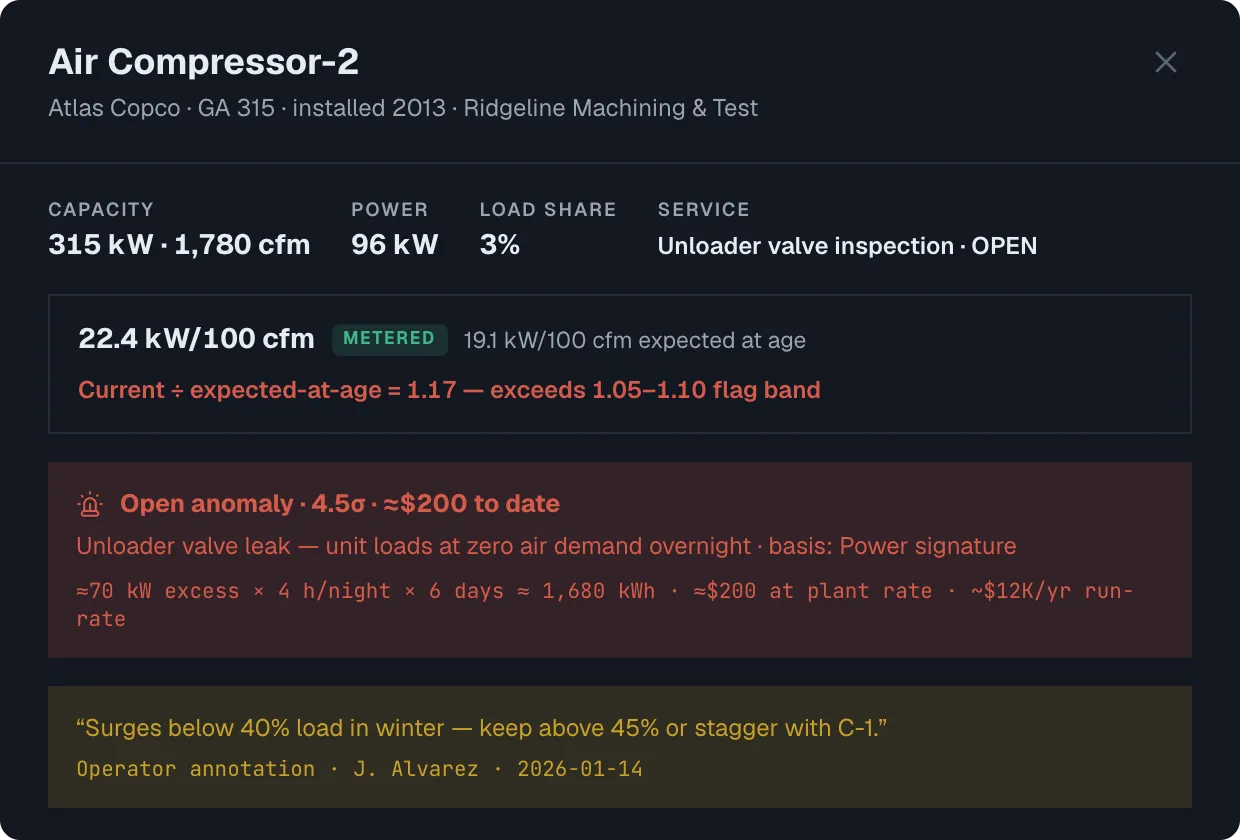
A compressor with a leaking valve, a chiller with fouled tubes, a furnace drifting off its efficiency curve — each one changes the plant's power signature before it becomes a failure. The data already sits in meters most plants have had for years. General-purpose AI can't read it: show a frontier model an industrial power signature and ask what equipment it is, and it guesses.
So we built the model that does.
A model, and an autonomous orchestrator built on it.
GENIE is the foundation model — it learns the physics and behavior of industrial energy systems. Marichi is the product that puts GENIE to work in real facilities. The same structure as a foundation model and the application built on it.
General-purpose AI scores around 1% at reading industrial equipment from its power signature. GENIE is near-perfect — because it was built for the physical world, not adapted to it.
Learns equipment physics, behavior, degradation, and faults from the signals systems emit.
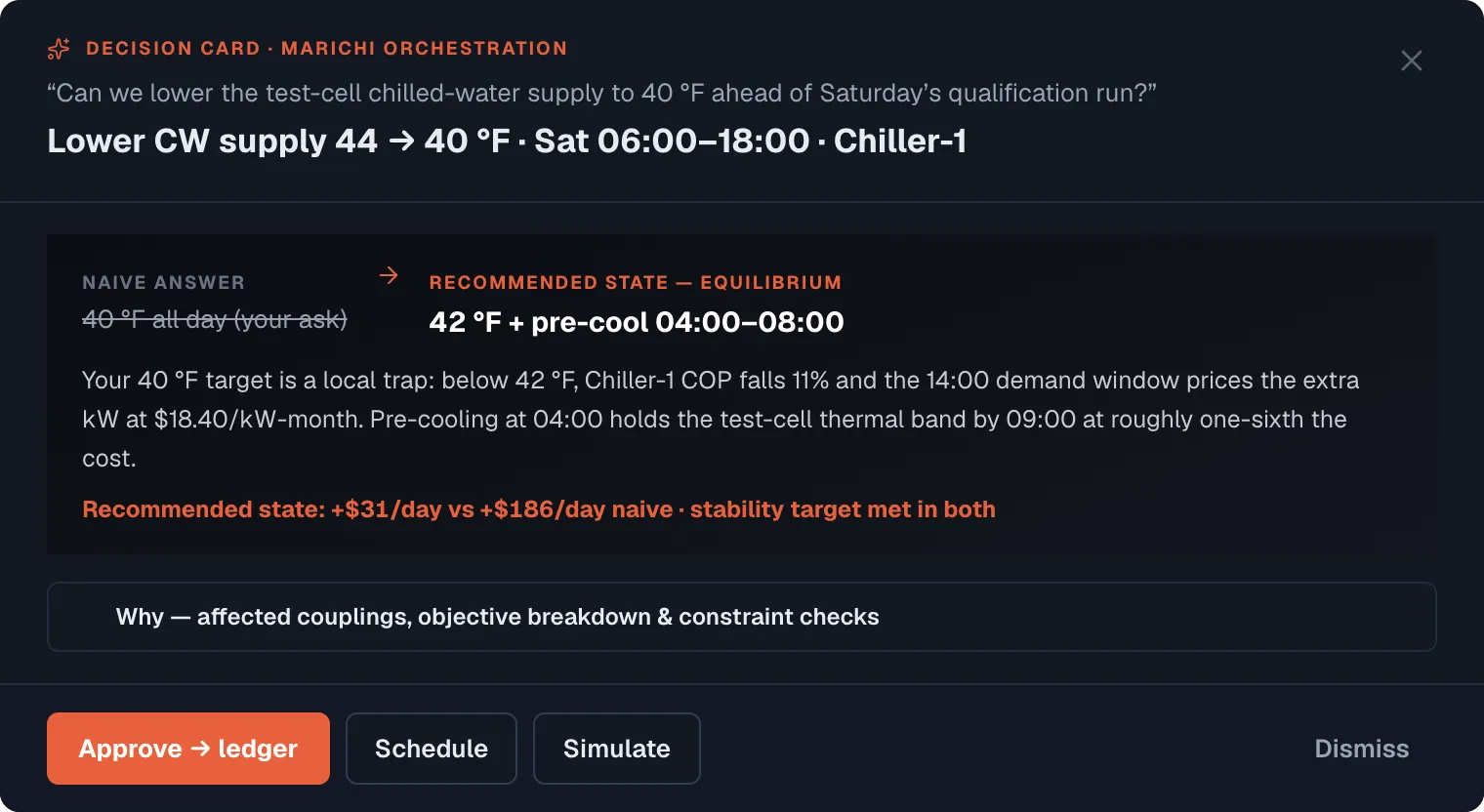
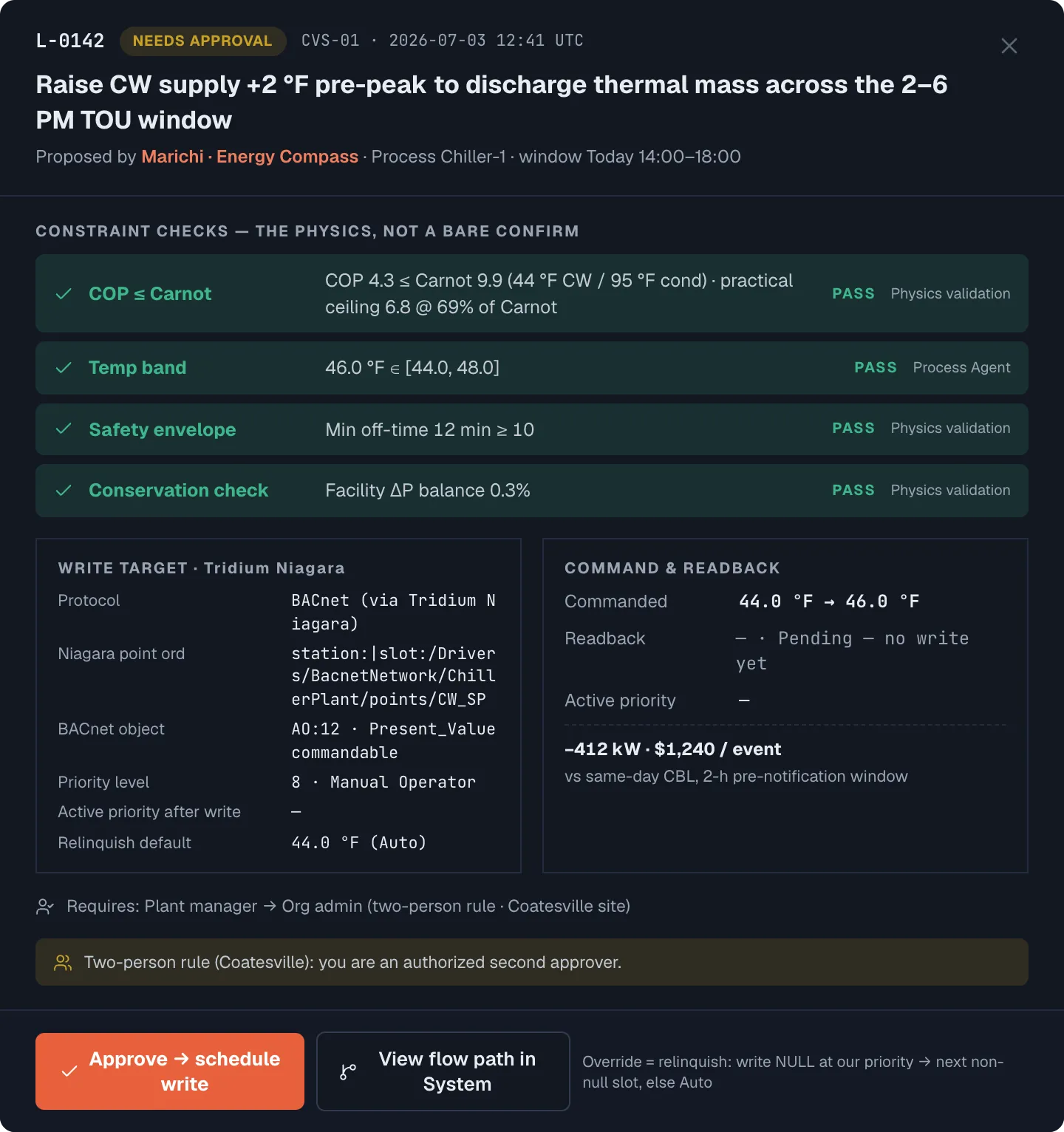
Cuts cost, catches failures, and shifts load within safe physical limits — nothing changes until an operator approves it.
Marichi — application built on top of GENIE's intelligence
Marichi connects to a plant's meter and sensor data, works out what each piece of equipment is doing, and acts on it — catching problems before they become failures, cutting energy cost, and capturing the incentives a plant qualifies for. Every recommendation is checked against physical limits, and nothing changes until an operator approves it.